Reasons to Blog in 2025 That Still Matter in 2026
Table of Contents
Back in 2025, I heard the same doubt over and over: should I start a blog, or is it still worth it? AI could write drafts in seconds, Google kept changing how results looked, and social platforms felt less stable every month.
I still think the answer was yes, and from where I sit in 2026, that answer looks even stronger. The best reasons to blog haven’t disappeared. They’ve sharpened. A blog gives me an asset I own, a place to show real experience for personal growth and creative freedom, and a base to build an audience for everything else I publish.
A blog gives me something social platforms can’t: ownership
Social media platforms are useful, but I never confuse reach with control. An account can lose traction overnight. A platform can change its feed, trim link visibility, or push creators toward a new format with little warning.
My blog works differently. It lives on my domain and hosting, under my rules, with my archive, my email list, and my structure. That matters more now because so much online attention sits on rented land.
I treat social media as distribution. My blog is the archive I control.
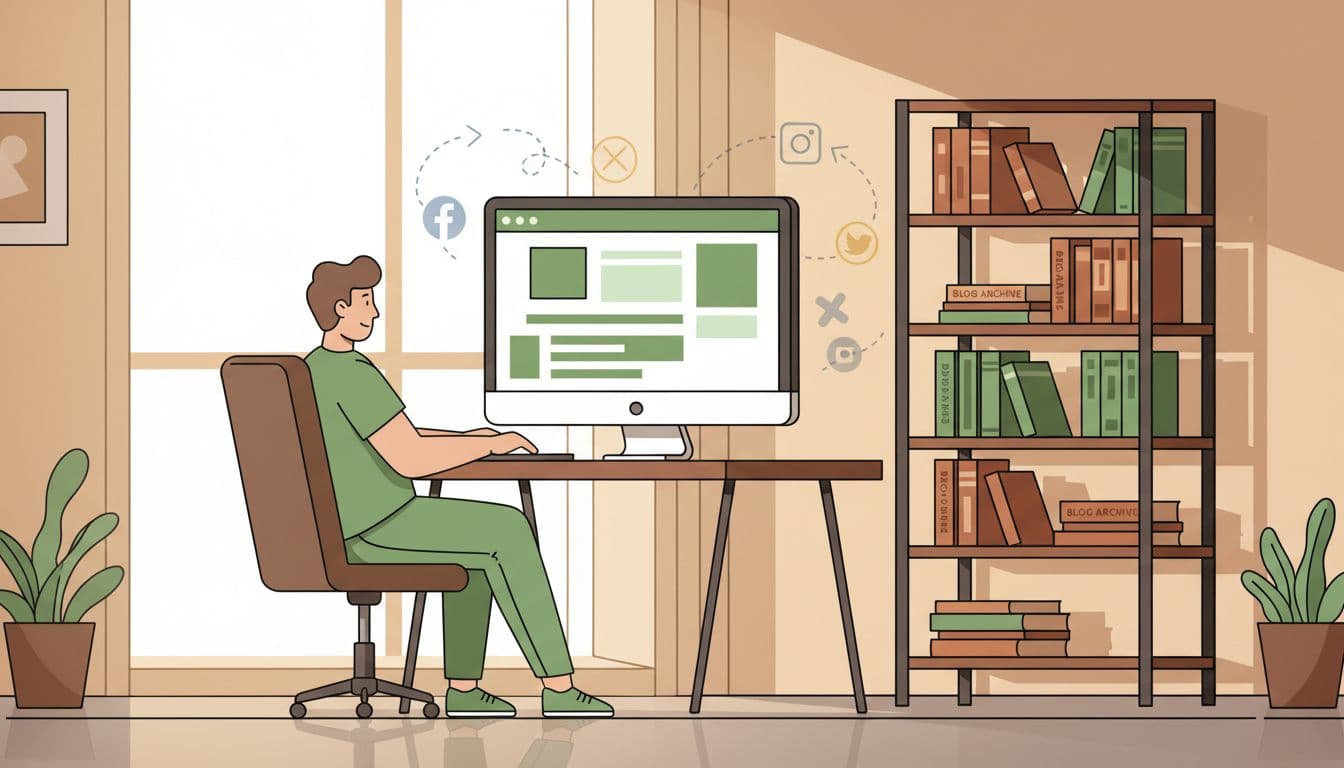
That ownership also matters for search engine optimization. Search, especially Google search results, is no longer just a list of blue links. People now discover ideas through AI summaries, search snippets, newsletters, and recommendation feeds. Still, those systems need source material. They pull from pages that are clear, original, and grounded in real knowledge.
That’s one reason I don’t buy the claim that AI killed blogging. If anything, it raised the value of good source content. Recent reporting from Search Engine Land on blogging, AI, and the SEO road ahead makes a similar point: clarity and trust now matter more, not less.
A strong blog post can also keep working for months or years, helping to build an audience over time. I’ve had older posts bring in readers long after a social post would have vanished. That kind of shelf life is hard to ignore, especially for a small business that can’t chase every trend but wants to start a blog and build an audience sustainably.
Blogging still builds trust when AI makes content cheap
AI changed content production fast. In 2025, anyone could spin up decent copy at scale. Because of that, I think human proof to establish expertise and expert authority matters more now. Readers want signs that a real person or company knows the topic from experience.
A professional blog is perfect for that. I can explain what worked, what failed, what I changed, and why. AI can imitate structure. It can’t replace lived context very well. That’s why thoughtful, experience-based writing stands out on a niche blog, and it helps improve writing skills. I saw this same idea in a piece on why blogging remains essential in the AI era, and it matches what I’ve seen firsthand.
This is also where a lot of outdated blogging advice falls apart. I don’t think you need to post every day on social media platforms. I don’t think shallow 600-word posts help much. What works better is consistent content through fewer posts with more substance, clearer examples, and regular updates for search engine optimization.
For different types of publishers, trust shows up in different ways:
- Creators: I can turn lessons, reviews, or behind-the-scenes notes into posts that show my taste and process for my personal brand.
- Freelancers and personal brands: Case studies, FAQs, and opinion pieces in freelance writing help prospects understand how I think before we ever speak.
- Companies: Tutorials, comparisons, and customer education posts reduce friction and answer buying questions early.
When people land on a useful post, they don’t just see information. They see how I solve problems. That’s a big reason blogging still matters in 2025 and beyond.
One good blog post can power my whole marketing system
A blog post doesn’t need to stay a blog post. That’s one of the strongest reasons to start a blog now. I can publish once, then reshape the same idea for email, LinkedIn, X, YouTube, short video, sales pages, and customer support.
In other words, the blog becomes the source file for my content marketing strategy.
I’ve found this is far more stable than building everything around short-form content alone. Social posts are quick sparks. Blog posts are logs on the fire. They burn longer, attract search engine traffic, and give me something solid to reuse.
Here are a few simple examples:
- A creator can publish a tutorial, then turn it into a video outline, newsletter, and affiliate marketing roundup to make money online through passive income.
- A consultant can write one case study that answers sales objections before a discovery call.
- A company can post a product comparison that helps buyers choose and cuts repeat support questions.
That reuse matters because content takes time. If one article can serve five channels, blogging stops feeling slow.
It also helps with consistency. When I sit down to plan content, I don’t start with, “What should I post on social today?” I start with, “What useful page should live on my site?” building a professional blog for Google search results. Then I branch out from there, across social media platforms.
If you’re ready to publish on your own site, SmartWP has a practical guide on how to start a WordPress blog using the WordPress platform. And if you want a broader look at why this approach is still growing, I also liked this take on why blogging may be bigger than ever in 2026.
The bottom line
The bottom line: start a blog. If 2025 felt like the year blogging might fade, it turned out to be the year its value became easier to see. I still blog because it gives me ownership, trust, and a durable home for my best ideas, plus it serves as a creative outlet with networking opportunities and potential for a lifestyle business. Maintaining a standalone blog builds technical skills, can lead to a book deal, and helps improve writing skills over time. Start small, write something genuinely useful, and let your site become the place your work lives, not just the place your posts point back to.