COFFEE TIPS
Table of Contents
I used to think “good coffee” was mostly about buying high-quality Single-origin Coffee beans. Then I started making tiny, boring changes to my home brewing: weighing my dose, grinding a little finer, and using hotter water. The difference felt like switching from a fuzzy radio station to a clear one.
These coffee tips are the same ones I fall back on when I want a better cup without making mornings complicated. I’ll give you solid starting points (ratios, temps, times), then I’ll show you how to fix flavor problems fast.
Start with the four things that control flavor (more than your brewer)
Great coffee is a simple recipe, coffee plus water. The trick is controlling the parts that swing taste the most: freshness, grind, water, and ratio. When I get those right, even an average brewer makes a good mug.
Freshness matters because coffee goes flat as aromatics fade. I try to buy smaller bags and use them within a few weeks of the roast date. For storage, I keep beans in an airtight container away from light and heat, not next to the stove.
Next comes grind size. I treat grind size like “brew speed” that controls extraction. If water runs through too quickly, coffee tastes sour and thin. If it runs too slowly, it turns bitter and dry. A burr grinder helps, but even with a basic grinder, a consistent grind improves if I avoid grinding too far ahead of time.
Water is the silent ingredient. If your tap water tastes sharp, your coffee will too. Filtered water usually gives a cleaner cup. Water temperature also matters a lot. For most brews, I start at 92 to 96°C (198 to 205°F).
Finally, the water-to-coffee ratio is your steering wheel. I default to 1:15 to 1:17 (1 gram coffee grounds to 15 to 17 grams water). Use a digital scale to measure precisely. If you want a simple benchmark across gear, I like this overview of home methods for context: best ways to make coffee at home.
Here are reliable starting points I use (all adjustable after you taste):
| Method | Starting ratio | Example dose (coffee) | Water (total) | Water temp | Total time |
|---|---|---|---|---|---|
| Drip coffee maker | 1:16 | 20 g (0.7 oz) | 320 g (11.3 fl oz) | 92 to 96°C (198 to 205°F) | 4 to 6 min |
| Pour-over | 1:16 | 15 g (0.5 oz) | 240 g (8.1 fl oz) | 92 to 96°C (198 to 205°F) | 2:45 to 3:30 |
| French press | 1:15 | 30 g (1.1 oz) | 450 g (15.2 fl oz) | 93 to 96°C (199 to 205°F) | 4 to 9 min |
| AeroPress | 1:15 | 15 g (0.5 oz) | 225 g (7.6 fl oz) | 85 to 92°C (185 to 198°F) | 1:45 to 2:30 |
| Espresso | 1:2 (brew ratio) | 18 g (0.6 oz) | 36 g (1.3 oz) out | 90 to 96°C (194 to 205°F) | 25 to 30 sec |
The takeaway: pick one method, lock in a ratio, then adjust grind to hit a reasonable brew time.
My best shortcut: if the cup tastes “off,” I change one variable (usually grind) and brew again.
Method-by-method coffee tips (with times, bloom, and simple steps)

Photo by Cup of Couple
Pour over: use the bloom to stop sourness
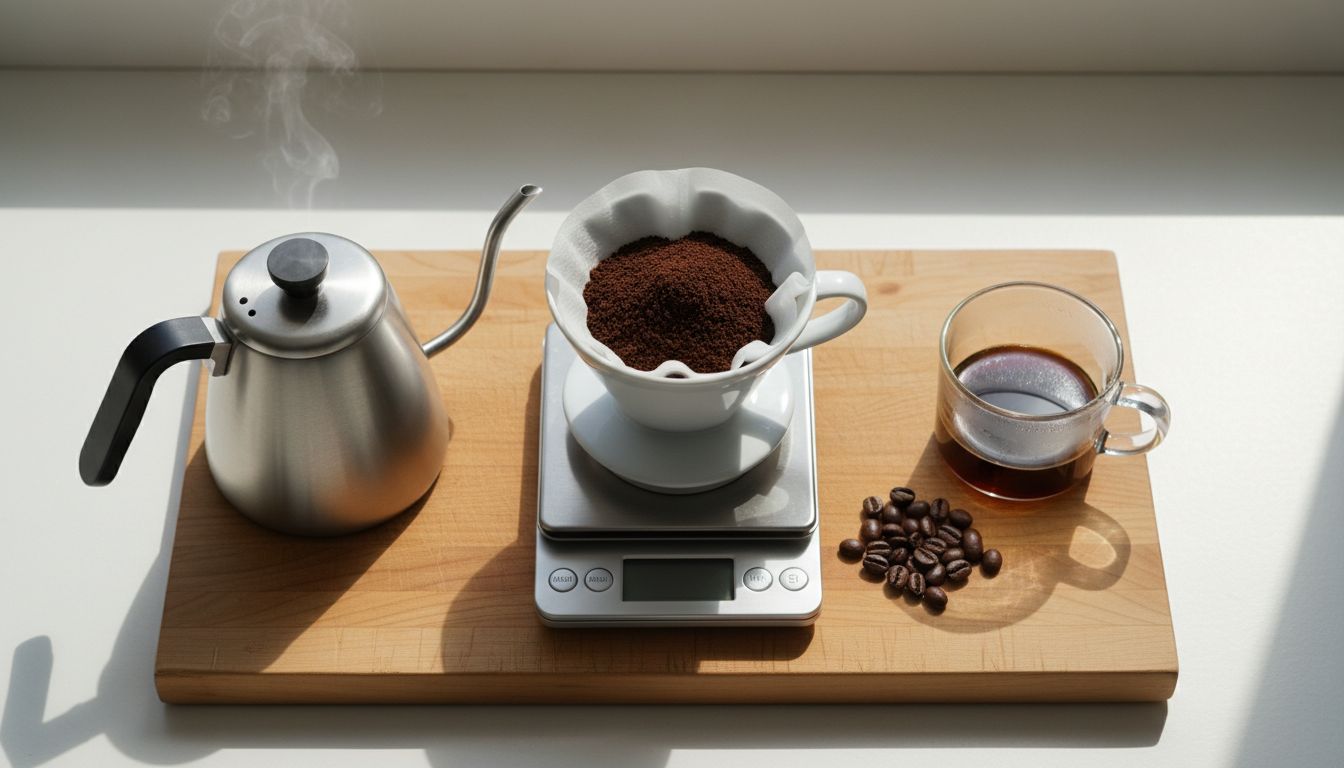
Pour over rewards small habits. First, I rinse the paper filter with hot water from a gooseneck kettle to remove papery taste and preheat the dripper. Then I dose 15 g coffee and pour to 240 g water for an easy 1:16.
My pour over flow looks like this:
- Bloom: add 30 to 45 g water (about 2 to 3 times the coffee weight), wait 30 to 45 seconds.
- Main pour: pour in slow circles to reach about 150 g by 1:15.
- Finish: top up to 240 g, aim to finish pouring by 2:00.
- Let it drain, total time 2:45 to 3:30.
If you want a clear explanation of why timing and temperature matter, this is a solid deep dive: how pour-over works (temperature and timing).
Drip coffee maker: fix the two common problems
A drip coffee maker can make great coffee, but two issues show up a lot: uneven grounds and cold brewing.
I help both by using a medium grind (like sand), measuring with a scale, and making sure the drip coffee maker is clean. Old oils turn coffee dull and sometimes a little rancid. If your drip coffee maker has a small-batch mode, I use it for anything under 500 ml (17 fl oz), because many machines struggle with tiny brews. If you prefer a stronger brew, you might also enjoy a Moka Pot.
French Press: longer contact, less “mud”
With French Press, an immersion brewing method, I go coarser than pour over and stick to 1:15 to keep it full-bodied but not heavy. For a 2-mug batch, I brew 30 g coffee to 450 g water.
- Add water at 93 to 96°C (199 to 205°F), stir gently.
- Steep 4 minutes, then stir once more to knock crust down.
- Wait another 4 to 5 minutes, then press slowly and pour right away.
That extra wait lets fines settle, so the cup tastes cleaner without changing gear.
AeroPress: small tweaks make big changes
AeroPress is forgiving, which is why I love it on busy days. My baseline is 15 g coffee and 225 g water at 85 to 92°C (185 to 198°F).
I steep 1:30, stir for 10 seconds, then press for 20 to 30 seconds. If it tastes sharp, I grind finer or bump temp up a bit. If it tastes harsh, I grind a touch coarser or shorten the steep.
Espresso: a quick safety note, then a usable baseline
Espresso adds pressure, heat, and steam, so I stay cautious.
Safety note: keep hands clear of the steam wand and group head, purge steam away from you, and never force parts open while the machine is pressurized.
For a starting shot, I use 18 g in, aim for 36 g out (1:2), and target 25 to 30 seconds. If the shot runs fast and tastes sour, I grind finer. If it chokes and tastes bitter, I grind coarser.
Coffee troubleshooting: match the flavor to the fix
When a cup tastes wrong, it’s tempting to change everything. I’ve wasted a lot of coffee that way. Now I diagnose by flavor first, as it reveals extraction issues, then make one change.
Here’s the quick map I keep in my head. Flavor notes become more apparent when using a medium roast:
| What it tastes like | Most likely cause | Fix I try first |
|---|---|---|
| Acidity, thin | Under-extracted (too coarse, too fast, too cool) | Grind coffee grounds finer, raise temp to 94 to 96°C (201 to 205°F), extend time |
| Bitter, dry, harsh | Over-extracted (too fine, too long, too hot) | Grind coarser, lower temp slightly, reduce brew time |
| Weak, watery | Ratio too low or uneven extraction | Use more coffee (try 1:15), pour slower, improve distribution |
| Heavy, muddy | Too many fines or agitation | Grind a bit coarser, stir less, let French press settle longer |
| Hollow, flat | Stale coffee or dirty equipment | Buy fresher beans, clean brewer and carafe |
Besides taste, I watch the basics: brew time, dose, and yield. If I can repeat those, I can repeat the cup.
If you’re still deciding which brewing method fits your mornings, this comparison helps set expectations: which brewing method tastes best. Once you pick one, stick with it for a week. That’s when improvements start to feel obvious.
Conclusion: keep it simple, then get picky
Better coffee doesn’t require new gadgets, it requires a steady baseline. I focus on ratio, grind, temperature, and time, then I adjust one knob at a time. These coffee tips apply to any brewing method you choose. Keep in mind the roasting process influences the final taste of the coffee grounds. If you try only one change tomorrow, weigh your coffee and water, then taste with purpose. What’s the main thing you want from your cup, more sweetness, more body, or more clarity?