A slow blog without performance optimization feels like a coffee shop with a locked door, people leave before they even step in. When I choose managed WordPress hosting, I care about how much work it takes off my plate, not how flashy the sales page looks.
Table of Contents
A slow blog without performance optimization feels like a coffee shop with a locked door, people leave before they even step in. When I choose managed WordPress hosting, I care about how much work it takes off my plate, not how flashy the sales page looks.
In 2026, bloggers can find managed WordPress hosting that delivers speed, backups, security, and staging without paying enterprise prices. Still, some managed hosting providers feel like a helpful assistant, while others feel like a landlord who ignores your texts. Here’s where I’d put my money this year.
What I look for before I pay for hosting
For bloggers, the label matters less than the workload from a managed hosting provider. Some plans are true premium managed WordPress hosting. Others are WordPress-tuned shared hosting plans with most of the same day-to-day help. Either way, I want the host to handle automatic updates, caching, automated backups, and security features well enough that I can focus on writing.
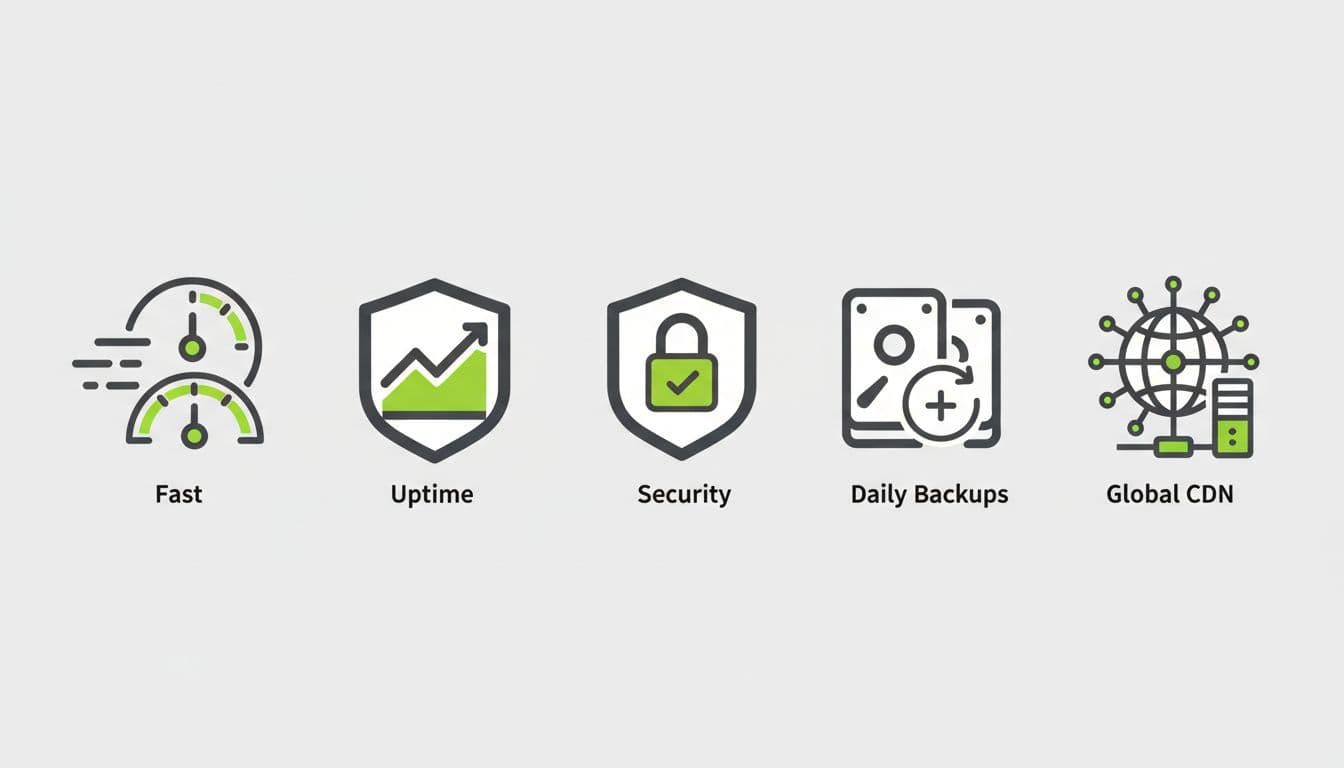
Speed comes first. If my blog drags, readers bounce, ad revenue drops, and search traffic gets harder to keep. I also want at least a 99.9% uptime guarantee, a built-in content delivery network, daily backups, staging sites, malware scanning, and 24/7 expert support from WordPress experts that can answer questions without sending me in circles.
Migration matters, too. A host can look great on paper, but if moving my site feels like hauling furniture up five flights of stairs, I’m out. I also check how well the plan offers scalability when traffic jumps, because a good post can turn into a busy week fast.
The cheapest intro price rarely wins. Renewal pricing and support quality matter a lot more after month three.
Before I trust any host, I like to compare vendor claims with independent hosting tests and a recent 2026 managed hosting comparison. If I want a wider shortlist beyond this post, SmartWP’s top 14 WP hosts tested and compared is a helpful place to keep researching.
Best managed WordPress hosting picks for bloggers in 2026
Here’s the short version before I break each host down.
| Host | Best for | Start price | Standout strengths | Main downside |
|---|---|---|---|---|
| SiteGround | Most bloggers | $2.99/mo | Strong uptime, backups, CDN, support, free migrations, server-level caching, SSL certificates | Renewal jumps to $17.99/mo |
| Hostinger | Tight budgets | $1.99/mo | Low cost, LiteSpeed, easy setup, custom domain name | Support is less polished |
| Rocket.net | Speed-first blogs | $30/mo | Cloudflare Enterprise, top performance, developer tools, SSH access, WP-CLI | Premium price |
| DreamPress | Mid-range value | $14.99/mo | NVMe storage, bundled CDN, reliability, server optimization, premium themes | Support trails competitors |
| Bluehost Cloud | Beginners | $29.99/mo | Easy dashboard, staging, backups, developer tools | Renewal jumps to $79.99/mo |
If I had to sum it up fast, SiteGround is the safest all-around pick, Rocket.net is the fastest, and Hostinger gives the best entry-level value.
SiteGround
If I were choosing one host for most bloggers, I’d start with SiteGround. At about $2.99 per month to start, this managed WordPress hosting gives me strong uptime, fast global delivery with a content delivery network, daily backups, automatic updates, server-level caching, SSL certificates, and some of the best 24/7 support in this group. The included migration help and multiple data center locations also make it easy to grow.
Pros: strong balance of price, speed, uptime, and support. Cons: the renewal rate rises to about $17.99 per month, and bigger traffic spikes can push me to upgrade sooner.
Hostinger
Hostinger is the budget pick I’d recommend when money is tight but I still want a solid experience, especially compared to basic shared hosting. Starting around $1.99 per month, it brings LiteSpeed performance, simple setup with custom domain name support, and a clean path for new bloggers who don’t want to babysit core software maintenance.
Pros: low starting cost, beginner-friendly dashboard, strong value for small blogs. Cons: support isn’t as strong as SiteGround’s, and it feels less premium once my blog starts pulling serious traffic.
Rocket.net
Rocket.net is what I’d buy when speed is the whole point. It starts around $30 per month, which is a real jump, but the Cloudflare Enterprise integration, edge delivery, performance optimization, web application firewall, DDoS protection, strong security, and high-touch support make it one of the fastest managed WordPress hosting options for content-heavy blogs.
Pros: top-tier performance, excellent uptime, strong support, premium CDN setup. Cons: it’s expensive, so it makes more sense once my blog already earns or gets steady traffic.
DreamPress
DreamPress sits in a nice middle lane. Starting at $14.99 per month, it offers NVMe storage, a bundled CDN, tuned WordPress performance with automatic updates, very strong reliability, and 24/7 expert support. I like it for bloggers who’ve outgrown entry plans but aren’t ready for premium pricing like Rocket.net, plus it handles WooCommerce and ecommerce websites well.
Pros: good value for the speed, reliable uptime, sensible mid-range pricing. Cons: support looks weaker than the top two, so I wouldn’t pick it if I expect lots of hand-holding.
Bluehost Cloud
Bluehost Cloud is the beginner-friendly premium pick from this managed hosting provider. At $29.99 per month to start, this managed WordPress hosting gives me automated backups, staging sites, malware scanning, solid security features, and a dashboard that doesn’t fight me. If I’m new and want a smoother setup with developer tools, that ease has value, even during traffic spikes.
Pros: easy to use, solid support, good built-in tools for testing changes safely. Cons: the renewal price climbs hard, up to about $79.99 per month, so long-term value is weaker.
How I’d choose the right host for my blog
If I were starting from zero, I’d pick Hostinger for the lowest budget or SiteGround for the better long-term balance. If my blog already gets search traffic, email signups, or ad revenue, I’d lean SiteGround or DreamPress. Meanwhile, if raw speed is part of my business model, Rocket.net would be worth the jump.
I also wouldn’t move without a backup and a migration plan. If the host’s free transfer tool isn’t enough, SmartWP’s guide to the best WordPress migration plugins 2026 can save a lot of stress. And if you’re still building from scratch, this 6 easy steps to launch a WP blog pairs well with your hosting choice.
The best host isn’t the one with the loudest ad. It’s the one that lets me publish, update, and grow without thinking about the server every day.
For most bloggers, I’d choose SiteGround’s managed WordPress hosting. For the smallest budget, I’d go with Hostinger. For pure performance, I’d pay for Rocket.net’s managed WordPress hosting, a top managed hosting provider.
Pick the host that fits your blog today, then let your content do the heavy lifting with help from WordPress experts.