Dance Moves for Beginners: My Go-To Steps for Parties, TikToks, and Fitness
Table of Contents
The first time I tried learning dance moves, I copied whatever I saw in a music video and hoped for the best. It felt like trying to speak a new language with only three words. The good news is beginner dance moves are all you need to look like you belong on the floor.
In this guide to learn to dance, I’ll walk you through a small set of moves I actually use. They work great for social dancing at parties, in a small bedroom, and even when you want a quick cardio hit. Most importantly, they’re built on simple patterns you can mix and match.
Before you learn steps, fix these two basics (posture + weight)
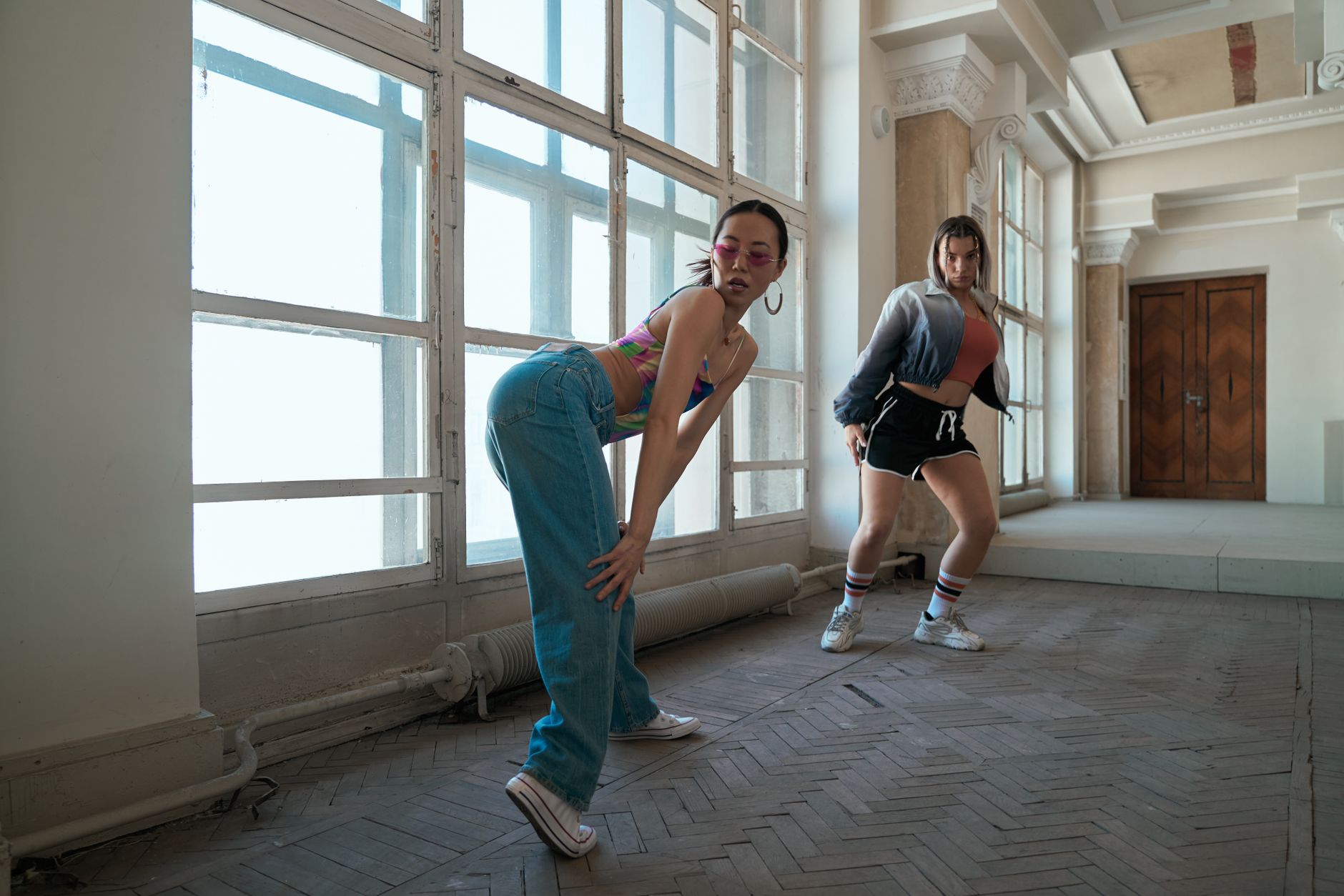 Photo by cottonbro studio
When a hip-hop dance move looks “clean,” it’s usually not magic. It’s these foundational moves: posture and weight transfer, essential to basic dance moves. Think of your torso movement like a flashlight; if it’s steady, the beam looks sharp.
First, set your posture. I stand tall, soften my knees, and keep my ribs stacked over my hips, like in ballet positions (no chest puffing). Next, I relax my shoulders and let my arms hang like they’re heavy. That alone makes everything look less stiff.
Then I focus on weight transfer, because that’s where the groove lives. “Groove” just means the steady, repeatable rhythm and beat in your body. For beginners, I keep it simple: a small bounce in the knees, timed to the beat.
Here’s the cue I repeat to myself: “Step, land, settle.” The “settle” is the tiny moment your weight drops into the new foot. If you skip that, you’ll look like you’re skating on ice.
If you’re not sure where your weight is, pause mid-move. You should be able to lift one foot without wobbling.
Low-impact option: keep the bounce smaller and stay more upright. Small-space option: make every step half the size, but keep the timing crisp.
9 easy dance moves I use on repeat (with counts and cues)
These are the popular dance moves I teach friends when they want results fast, including hip-hop dance favorites. They’re simple beginner dance moves, but they don’t look basic once you add groove. If you want more ideas later, I’ve also pulled a few from this roundup of easy beginner dance moves.
1) Step-touch (the “I can always do this” move)
Count 1: step to the right, knees soft. Count 2: touch left foot next to it, let your hips settle.
On counts 3–4, repeat to the left. Keep your chest calm and let the bounce happen in your knees. This works on any dance floor.
Arms: swing naturally like you’re walking.
Low-impact: remove the bounce and just shift weight.
Small space: keep feet under hips, step only a few inches.
2) Two-step (party-proof and easy to travel)
Count 1: step right. Count 2: step left next to it, but keep weight mostly on the right.
Then mirror it left on counts 3–4. The trick is that your body “sits” into the first step.
Arms: add a soft point, shoulder lean, or a shoulder roll every other set of 4.
Low-impact: slow it down and stay tall.
Small space: do it in place, like a side-to-side sway.
3) Grapevine (a fancy name for a simple weave)
A grapevine is a side step with a cross behind, common in line dances. Count 1: step right. Count 2: cross left behind.
Count 3: step right. Count 4: tap left (or step together).
Posture: don’t lean forward, keep your head level.
Arms: open them slightly on count 1, close on count 4.
Low-impact: skip the cross and do side steps.
Small space: make the cross tiny, more like an ankle tap behind.
4) Body roll (smooth without being complicated)
Start tall. Count 1: lift chest slightly. Count 2: let ribs drop. Count 3: belly follows.
Count 4: hips finish and settle. It’s like a wave traveling down, with roots in jazz dance.
Weight: stay centered, don’t shift side-to-side yet.
Arms: hands on thighs works, or keep them loose at your sides.
Low-impact: smaller range, slower timing.
Small space: perfect in place, no travel needed.
5) Box step (a staple for wedding guests)
Count 1: step forward right. Count 2: step left to the side.
Count 3: step back right. Count 4: step left together. Then reverse starting left.
Posture: keep shoulders square, like you’re walking a rectangle.
Arms: hold an invisible steering wheel, small and controlled.
Low-impact: shorten the forward step.
Small space: do a micro-box, almost like a toe-tap pattern.
6) Running man (the beginner version that actually works)
Count 1: lift right knee as left foot slides back a few inches.
Count 2: switch, right foot lands as left knee lifts, right foot slides back. This classic 90s move adds fun groove.
Groove cue: think “up” on the knee, “down” on the landing.
Arms: jog arms lightly, don’t overdo it.
Low-impact: lift knees lower and reduce the slide.
Small space: replace the slide with a quick toe tap back.
7) Kick-ball-change (clean, sharp, and great for photos)
Count 1: small kick forward with right (low, shin height).
Count 2: ball change right down, quick step left. Count 3: step left in place. Count 4: pause and hit a pose.
Weight: commit to the step after the kick, don’t stay on the back foot.
Arms: match the kick with a forward punch, then relax.
Low-impact: turn the kick into a toe tap.
Small space: keep the kick almost under your body.
8) Pivot turn + pose (instant confidence)
Start feet under hips. Count 1: step right. Count 2: pivot a quarter turn left on the balls of your feet.
Count 3: step together. Count 4: freeze for a beat.
Posture: lift through the crown of your head, like someone’s gently pulling you up.
Arms: on the freeze, choose one clear shape (point, hand on hip, or both hands up).
Low-impact: reduce the pivot angle.
Small space: pivot in place, no travel.
9) The Twist (timeless crowd-pleaser)
Count 1: swivel feet out to the right, hips twist right, knees bent. Count 2: swivel feet in.
Count 3: swivel out left, hips twist left. Count 4: swivel in and bounce.
Posture: keep it bouncy and playful, shoulders relaxed.
Arms: shake hands loosely at waist level, opposite to hips.
Low-impact: slow the swivel, reduce bounce.
Small space: do it all in place, tiny swivels.
How I practice dance moves without getting in my head
I used to “practice” by doing a move 50 times fast. That built stress, not skill. Now I practice to master basic moves in my dance repertoire like I’m learning a drum beat: slow first, then clean, then faster.
First, I pick one move and set a timer for 6 minutes. I run it at three speeds: slow (so I can feel weight), medium (so it starts to groove), then song speed (so it becomes real). If you don’t have a metronome, just use a steady beat and count out loud.
Next, I use a mirror for posture checks, not for judging. I look for two things: are my shoulders relaxed (unlike formal ballet positions), and does my head stay level? After that, I film one 20-second clip on my phone. Watching it once gives me more feedback on my footwork than guessing for an hour. Internalizing the rhythm and beat matters more than perfect form in basic dance moves.
Film from chest height, not from the floor. Bad angles make good movement look messy.
If you want a longer list of beginner-friendly dances for inspiration, this guide on fun and easy dances to learn can help you pick a style that fits your vibe. Also, when I want motivation, I remind myself dancing counts as exercise too. This overview of dance as a workout matches what I feel after a sweaty session.
A simple 45-second routine you can do anywhere
Once you know a few dance moves, the real unlock is chaining them into a routine perfect for a crowded dance floor. This 4-count structure is similar to simplified line dances: each “section” gets 8 counts, then I switch.
- 8 counts: Step-touch with bounce (or the twist), add a small arm swing.
- 8 counts: Two-step (or the dougie), add a shoulder pop like the woah on counts 2 and 4.
- 8 counts: Grapevine right, grapevine left (or the sprinkler), keep it light.
- 8 counts: Body roll with smooth torso movement for 4, then pivot turn + pose for 4.
- 8 counts: Running man (easy version or box step), stay in place.
- 4 counts: Kick-step right, 4 counts: kick-step left, finish with a pose.
Small-space version: replace grapevines with two-steps or box step in place. Low-impact version: swap running man for step-touch and keep everything grounded.
Conclusion
If you can shift your weight on beat, you can dance. Start with posture, add a steady groove, then rotate through a few reliable popular dance moves until they feel like yours. Practice these dance moves for any social dancing event. After that, record a short clip, tweak one thing, and repeat tomorrow. Your future self will thank you with confidence on the dance floor when the music comes on and you don’t freeze. Now go learn to dance.