Reasons To Blog In 2026 And What Compounds Over Time
Table of Contents
Most people think blogging is about posting opinions online. I used to think that too. Then I watched a few simple posts I wrote months earlier start bringing in steady visitors, emails, and opportunities I didn’t expect.
That’s why I still point beginners to the same idea: the best reasons to blog aren’t flashy, they’re durable. A good blog grows slowly, then it starts to feel like it’s working in the background.
If you’re a student, a job seeker, a freelancer, a creator, or a local business owner, blogging can become your long-term advantage. You just need the right expectations, and a small weekly habit.
A blog gives you an owned home base (not rented space)
Social platforms can be fun, and they can be great for reach. Still, I don’t trust them as my foundation. Feeds change, accounts get flagged, and yesterday’s “winning format” stops working without warning.
A blog is different because it’s yours. Your posts live at a stable address. Your About page doesn’t disappear because an app changed direction. Also, you can build an email list from day one, so you’re not begging an algorithm to show your work.
Here’s how I think about “ownership” when I’m choosing where to put effort:
| Channel | What you control | What can disappear overnight | Best use |
|---|---|---|---|
| Blog (your site) | Content, design, structure, updates | Very little (if you keep backups) | Evergreen discovery, authority, portfolio |
| Social platforms | Your posts (until they limit reach) | Reach, account access, rules | Fast feedback, community, top-of-funnel |
| Email list | Relationship and delivery | Less (still follow sender rules) | Returning readers, sales, launches |
The takeaway: I post on social, but I publish on my blog.
This week: Pick a simple theme and publish one “start here” page that explains who you help. If you want a clean setup path, follow this guide on how to start a WordPress blog.
Search traffic is slow at first, then it starts to stack
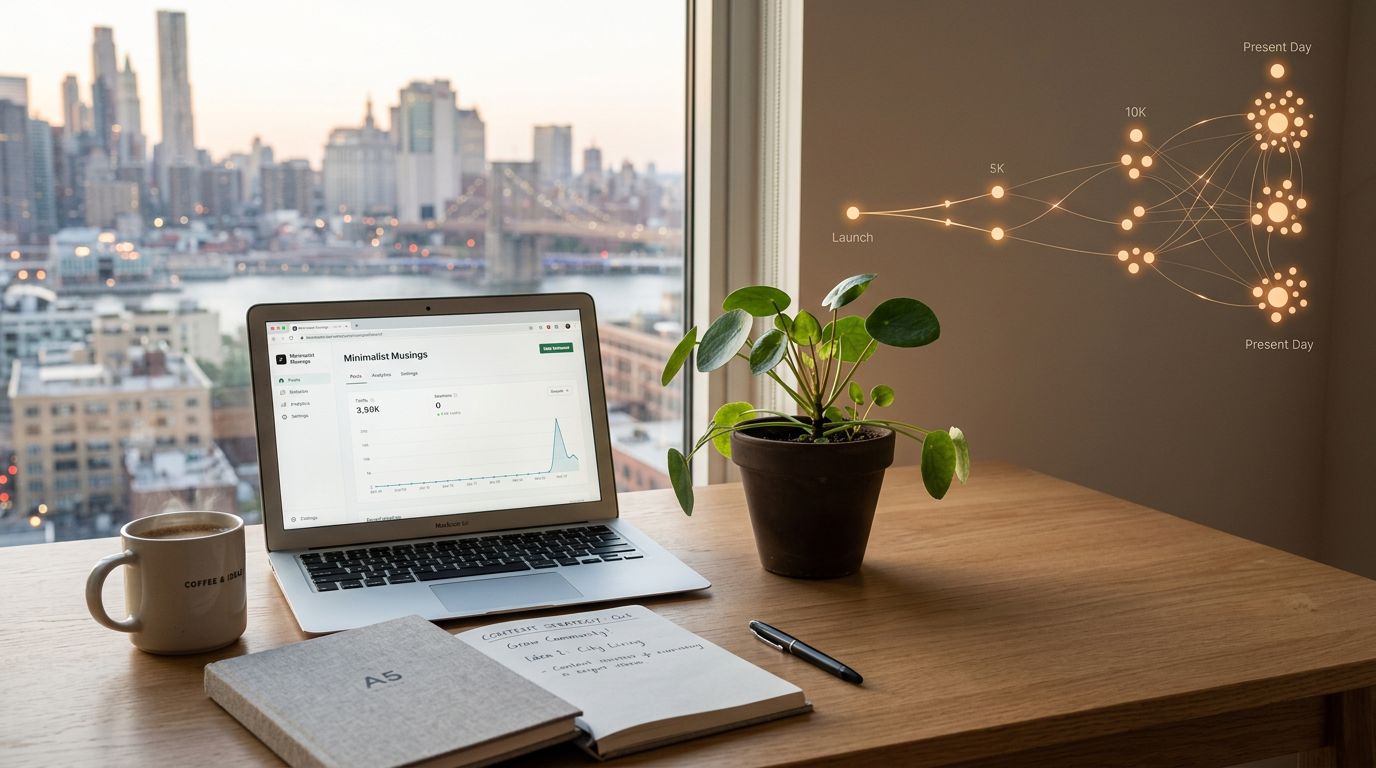
Search traffic is the most boring win in week one, and one of the best wins in year two. One helpful post can bring visitors for years, especially when it answers a clear question.
I’ve seen this work across totally different people:
A job seeker can write “What I learned building a data dashboard in Excel” and show real thinking. A freelancer can publish a short case study and attract clients who already trust the process. A creator can turn videos into supporting posts that rank for specific how-to questions. A local business can write pages like “What it costs to replace a water heater in Phoenix” or “Best time of year to reseed a lawn here,” then pick up calls from nearby searchers.
The compounding part comes from two habits: write evergreen topics, and update them. When you refresh a post with new screenshots, pricing, or lessons learned, you keep it accurate, and that helps trust.
If I had to choose one blogging skill that pays forever, it’s writing the clearest answer on the internet for one specific question.
This week: Make a list of 10 questions people already ask you in DMs, emails, or at work. Then write the simplest one first, and add one original example.
Your blog turns into a living portfolio (with proof, not claims)
Resumes and profiles are full of confident sentences. A blog lets you show receipts.
When I’m deciding whether to trust someone’s skills, I look for evidence: screenshots, before-and-after notes, trade-offs, and the messy stuff they learned the hard way. Blogging makes that easy because every post can be a mini-sample of how you think and work.
This is also where E-E-A-T shows up in a practical way. You don’t need fancy credentials, but you do need signals that you’ve actually done the work. That might look like:
A designer sharing a teardown of a homepage redesign. A bookkeeper explaining how they fixed a client’s cash flow issue (with numbers removed). A student posting weekly notes while learning Python, including what broke and how they fixed it.
Even better, your portfolio becomes searchable. Months from now, someone can find your post, read it, and email you because they want that exact thing.
This week: Write one “project story” post. Keep it simple: the goal, what you tried, what worked, what didn’t, and what you’d do next time.
If you’re building on WordPress, it helps to keep your setup lean and reliable. When I want to improve a blog without turning it into a plugin mess, I start with a short list like these best WordPress plugins for blogs.
Blogging builds authority and relationships you can’t fake
Authority sounds like a big word, but in real life it’s simple: people start associating your name with a topic. That happens when you publish consistently, explain things clearly, and don’t dodge the hard parts.
I’ve watched blogging open doors in quiet ways. Someone quotes your post in a team meeting. A podcast host reaches out after reading your tutorial. A local shop owner asks if you can help because your posts made the choice feel obvious.
This is also where comments and email replies matter. A blog post is not a mic drop, it’s a doorway. When readers respond, you learn what’s confusing, what’s missing, and what they want next. Over time, that feedback turns into better posts, better offers, and better work.
AI-assisted writing fits here too, as long as I treat it like a helper, not a replacement. I’ll use AI to brainstorm headings or clean up a rough outline, then I add the part AI can’t: my experience, my mistakes, my photos or screenshots, and my real opinions. That human layer is what builds trust.
This week: Write a post that invites replies. Add one line near the end: “If you’re stuck on this, email me your situation and I’ll point you in the right direction.”
If you want to speed up drafts without losing your voice, these best AI plugins for WordPress bloggers can help, especially for outlining and editing.
The bottom line: start small, publish, then keep going
The reasons to blog that matter most are the ones you’ll feel later: compounding search traffic, a public portfolio, real authority, and an audience you own. None of that happens overnight, but it does happen when you publish one honest, useful post each week.
If you’re on the fence, pick one topic you know, write the clearest guide you can, and hit publish. Then do it again next week. That’s how a blog turns from a project into an asset.