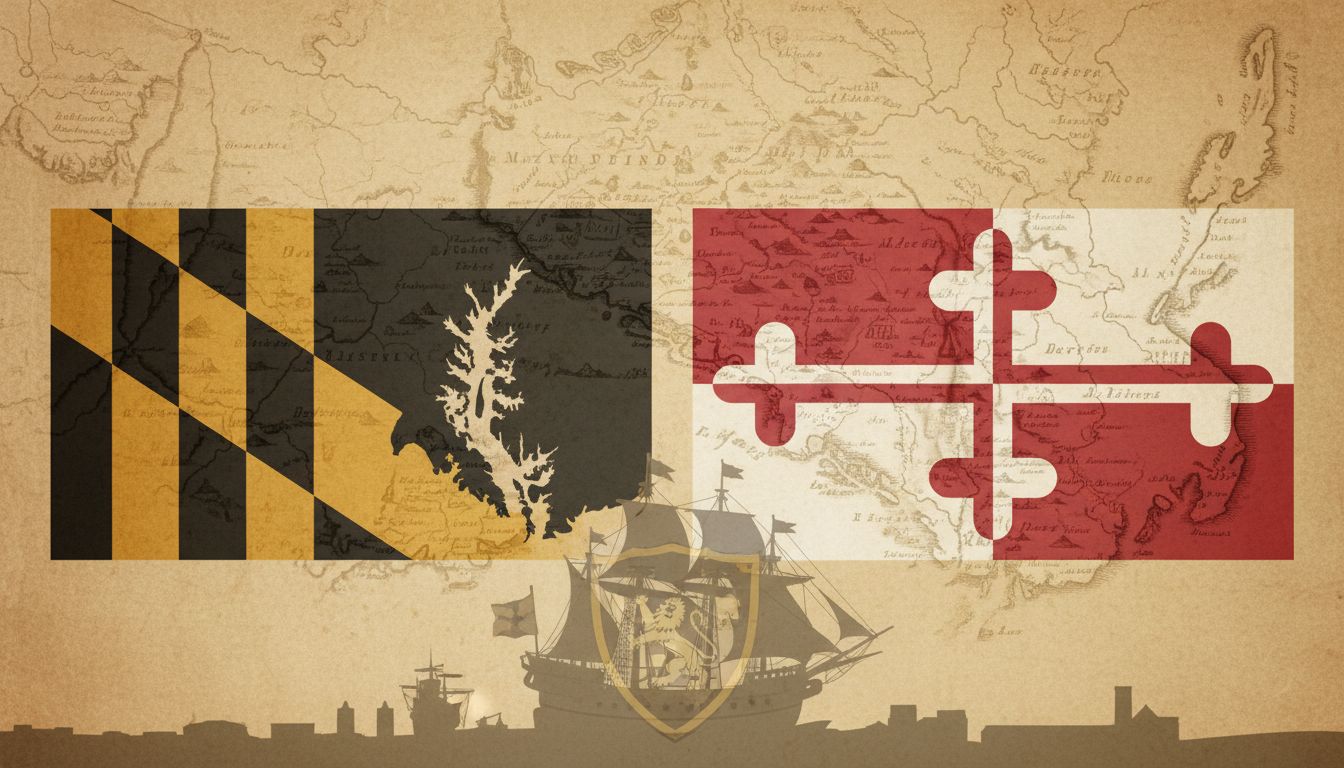
Maryland Flag History: How Calvert and Crossland Became One Banner
Table of Contents
The first time I really looked at the Maryland flag, I was standing outside a school gym before a game. It wasn’t on a pole high above me, it was on jackets, stickers, and painted on someone’s cooler. That’s when it hit me: this flag isn’t just “state stuff.” People actually wear it.
The bold pattern makes it easy to spot, but the real hook is the story. Maryland flag history is basically a family crest, a civil war memory, and a state identity, all stitched into one design.
The Calverts, the Crosslands, and why a colony had a coat of arms
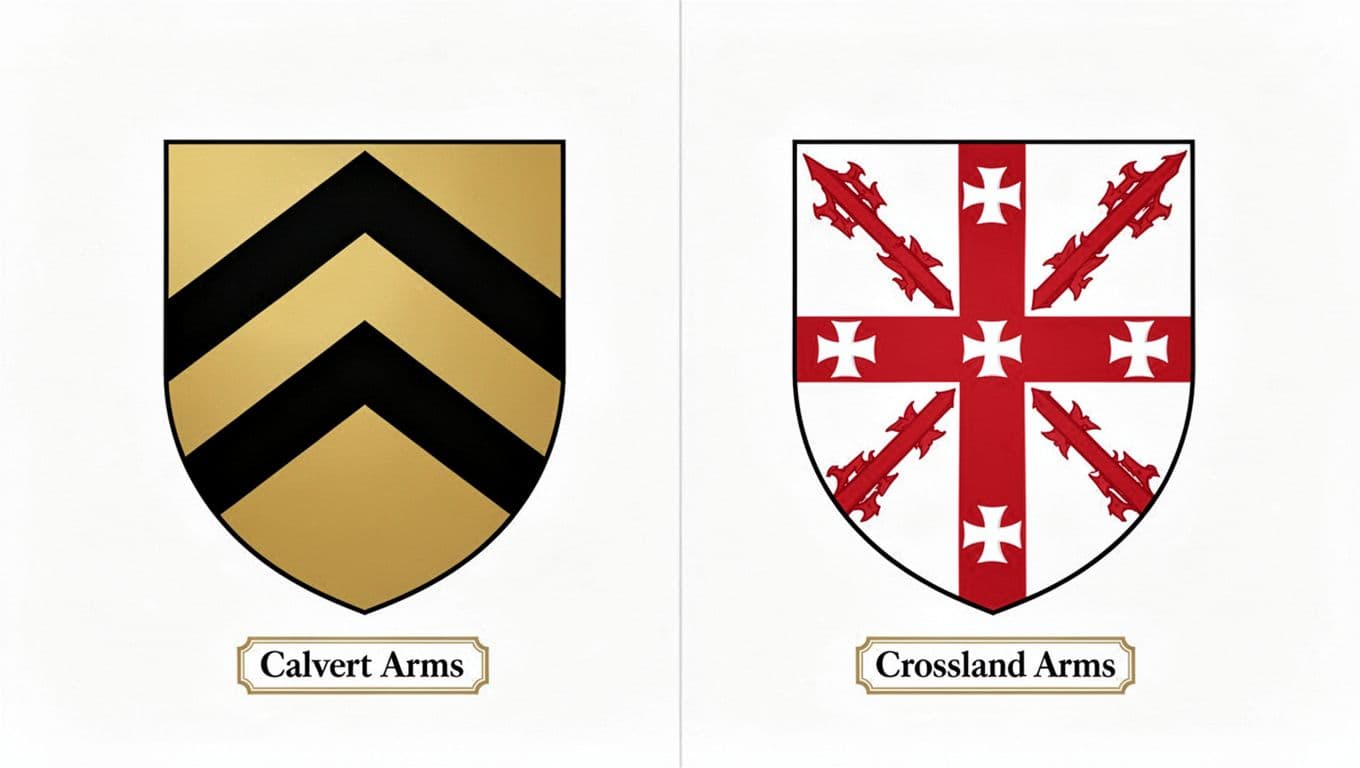
Maryland’s flag starts with a person, not a committee. In the 1600s, England granted Maryland as a proprietary colony to Cecilius Calvert, the 2nd Lord Baltimore. The Calverts weren’t just running a business venture, they were building a political project under the English crown.
In 1634, Maryland’s founders arrived at St. Mary’s City. Around that same era, the Calvert family’s coat of arms became the visual shorthand for the colony’s leadership and authority (the classic reference point you’ll see in most timelines is 1634). You can trace the basics in the Flag of Maryland summary, which lays out the heraldry and later adoption.
Here’s the key design idea in plain language:
- The Calvert arms are gold and black with strong stripe-and-diagonal shapes. On the flag, that part reads like alternating gold and black panels, with a bold diagonal element cutting through.
- The Crossland arms come from the Calvert family’s Crossland line (connected through marriage). This piece looks like a cross with rounded, clover-like tips (a “cross bottony”), using red and white.
If heraldry sounds like a foreign language, I think of it like a sports uniform. The colors and shapes aren’t random. They tell you who the “house” is, and who it’s tied to.
The Maryland flag isn’t based on a landscape, an animal, or a seal. It’s based on family heraldry, which is why it looks older than most U.S. state flags.
For extra local context that’s easy to read and Maryland-focused, I like this guide to Maryland flag symbolism. I treat it as a companion, not a primary document, but it helps connect the pieces.
Reading the flag like a map: what the quarters actually show
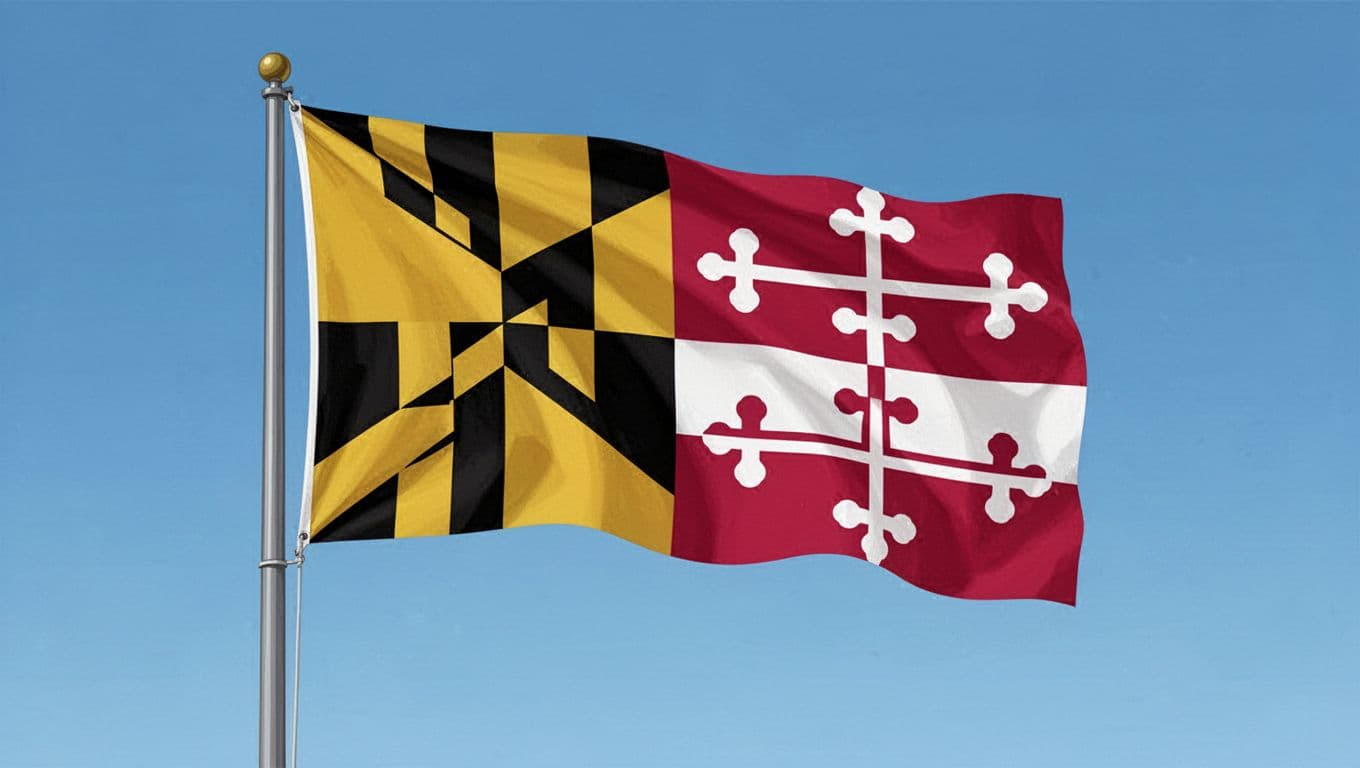
Maryland’s flag looks complicated until you know the trick: it’s a quartered banner, meaning it’s divided into four big squares.
- Top-left and bottom-right show the Calvert pattern (gold and black).
- Top-right and bottom-left show the Crossland pattern (red and white).
Once you see that, the layout sticks in your head.
The Crossland side confuses people because it’s not just a red cross on a white background. Instead, it’s arranged so the red and white swap places in different blocks, and the cross switches color as it crosses those blocks. That “color swap” effect is part of traditional heraldry, and it’s why the red-and-white quarters feel like a woven pattern.
This is also where the Civil War layer enters the story, and it’s worth stating carefully. During the Civil War, Marylanders fought for both the Union and the Confederacy. In popular retellings (and in many historical summaries), people link the flag’s quarters to those divided loyalties: the Calvert colors associated with Union sentiment, and the Crossland colors associated with Confederate sympathy. After the war, combining both into one flag can be read as a public signal of reunion inside a border state.
That doesn’t mean everyone experienced it the same way, and it doesn’t erase the war’s causes or costs. Still, it helps explain why this design endured. It carries memory, not just decoration.
If you want a quick explanation of why the design stands out among U.S. state flags, the Kengla Flag Company’s write-up on why Maryland’s flag looks so unique gives a helpful “vexillology for regular people” perspective.
From late-1800s banner to official adoption in 1904
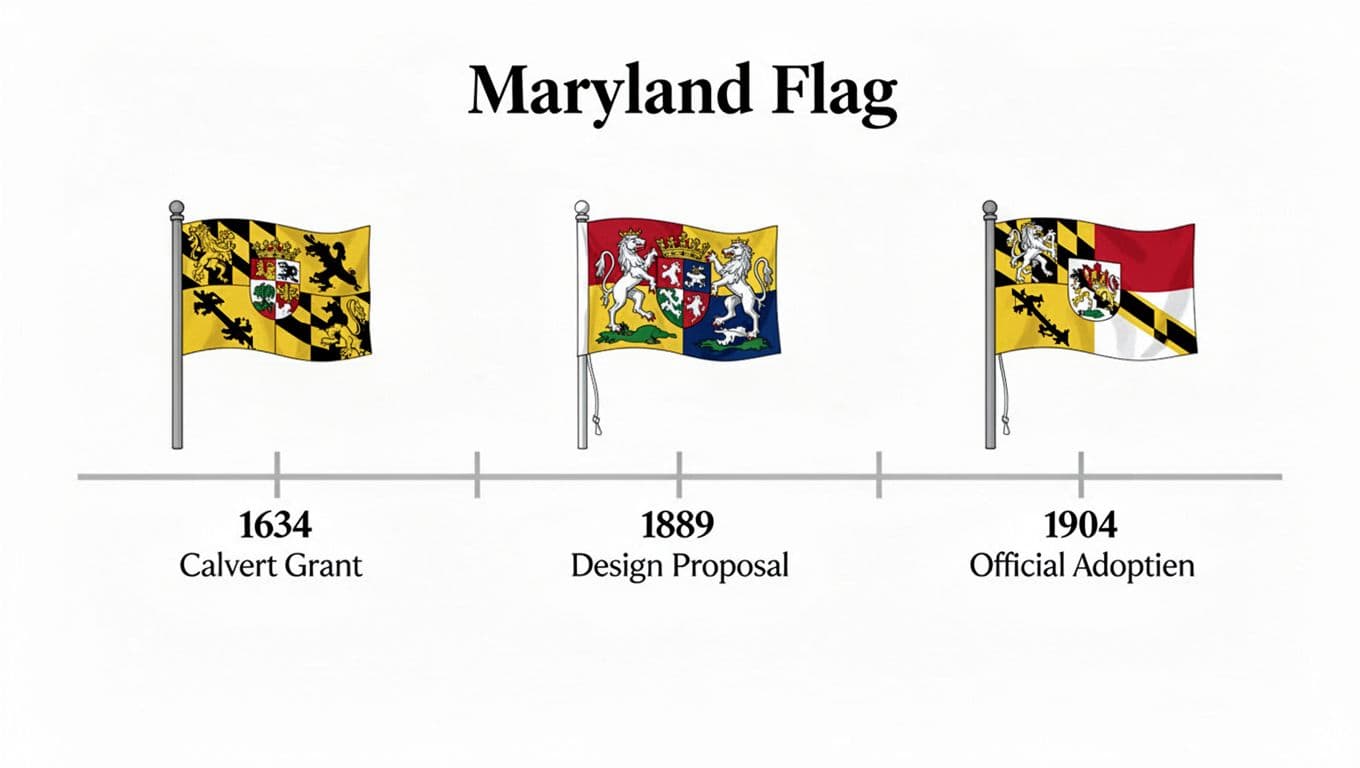
Most people assume a state flag gets designed once, then approved, then that’s it. Maryland’s path was slower. The banner-style use of the Calvert and Crossland arms grew in the late 1800s, showing up in civic displays and patriotic events. Many timelines point to 1889 as a milestone year when the combined design gained broader traction as a proposed state banner.
Then, in 1904, Maryland made it official. That year matters because it marks the step from “popular symbol” to “state standard.” After adoption, the design became the consistent reference for schools, government use, and public display.
Here’s a simple cheat sheet I keep in mind when I’m teaching or explaining it to friends:
| Year | What happened | Why it matters |
|---|---|---|
| 1634 | Calvert arms tied to colonial Maryland leadership | Establishes the heraldic roots of the design |
| 1889 | Combined banner appears as a serious proposal and public symbol | Shows the flag moving into statewide visibility |
| 1904 | Maryland officially adopts the current design | Standardizes the flag for state use |
The takeaway is pretty direct: Maryland didn’t invent a new logo. It formalized an older identity mark.
If you want to go beyond blog summaries, the most credible places to verify details are the Maryland State Archives, the Maryland Historical Society, and official state government pages that publish historical notes and flag guidance. Those sources help you separate “everybody says” from “the record shows.”
When you’re checking claims about flags, look for dates tied to laws, proclamations, or archival documents. That’s where the story stops being fuzzy.
Conclusion: why the Maryland flag still feels personal
Maryland’s flag works because it’s bold, but it lasts because it has a real paper trail. It links Cecilius Calvert, family heraldry, Civil War divisions, and a clear adoption point in 1904. That’s a lot of history for one piece of fabric.
Next time you see it on a hoodie or a classroom wall, try reading it like a four-panel story. If you’ve got a favorite place in Maryland where the flag shows up a lot, I’d love to know what it is, because the best part of Maryland flag history is how often people keep finding it in everyday life.